

How AI Proctoring Detects Cheating in High-Stakes Exams
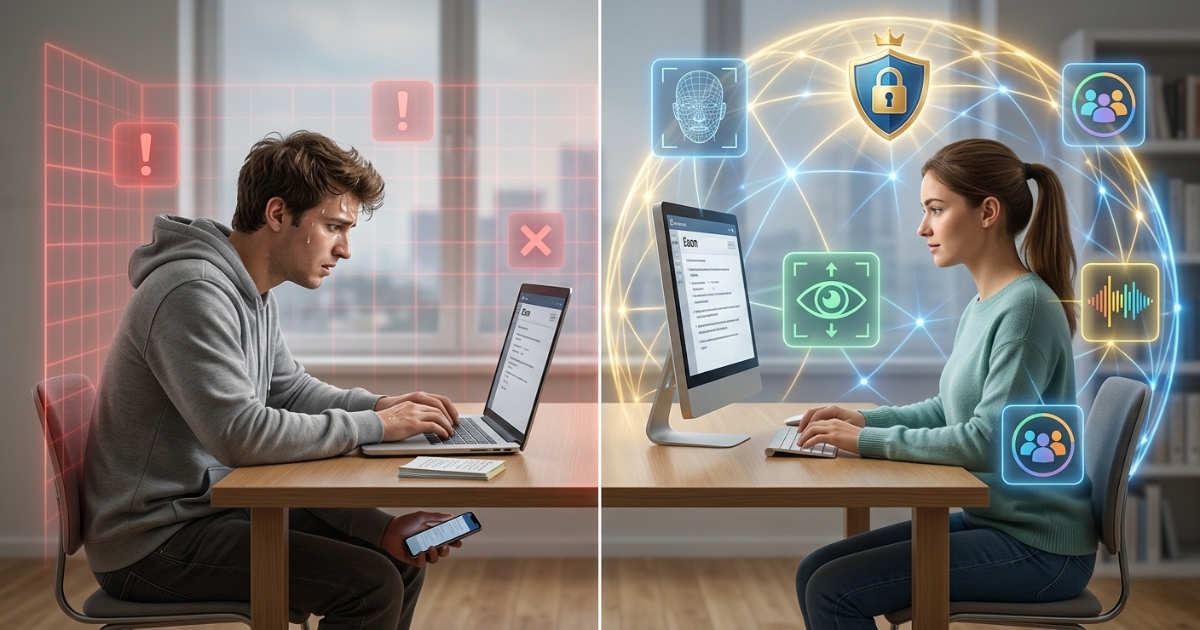
AI proctoring is redefining exam integrity. Learn multi-layered AI detection, like Talview’s Alvy, stops modern cheating to secure high-stakes certifications
SAN MATEO, CA, UNITED STATES, April 8, 2026 /EINPresswire.com/ -- Cheating in online exams is no longer what it used to be.
From hidden devices to AI-assisted answers, the methods candidates use today are more sophisticated, scalable, and harder to detect than ever before. As a result, organizations delivering **online proctoring for high-stakes exams** from certifications to government assessments are facing a growing challenge: how to ensure integrity in an increasingly digital world.
Traditional approaches are struggling to keep up. This is where AI proctoring is redefining how cheating is detected and prevented.
What Cheating Looks Like Today
Modern exam cheating is no longer limited to obvious violations.
Across use cases like remote proctoring for medical licensing, online proctoring for university finals, and proctoring software for CFA & CPA exams, common tactics include:
- Impersonation using proxy test-takers
- Use of secondary devices for real-time assistance
- AI-generated answers during exams
- Collaboration through messaging platforms
- Frequent tab switching or browser manipulation
These methods are often subtle and coordinated, making them difficult to detect through manual monitoring alone.
Why Traditional Proctoring Falls Short
Human-led proctoring has clear limitations in today’s environment.
It struggles with:
- Monitoring large volumes, especially in 1000+ concurrent tests
- Identifying behavioral patterns over time
- Maintaining consistency across sessions
- Detecting AI-assisted or indirect cheating
In the automated vs live proctoring comparison, human oversight alone is no longer sufficient. Detection needs to be continuous, scalable, and data-driven.
How AI Proctoring Detects Cheating
AI proctoring introduces a multi-layered approach to exam security, analyzing identity, behavior, and environment in real time.
Identity Verification and Authentication
The first layer is ensuring the right candidate is taking the exam.
Modern systems support remote proctoring with identity verification, including:
- Facial recognition and ID matching
- Liveness detection
- Continuous authentication throughout the session
This is critical for high-stakes certifications where impersonation risks are high.
Behavioral Analysis
AI systems continuously analyze candidate behavior to detect anomalies.
This includes:
- Eye movement tracking
- Head position and gaze direction
- Unusual activity patterns
Instead of relying on single events, AI identifies patterns that may indicate cheating.
Environment Monitoring
AI can detect environmental risks that human proctors may miss:
- Presence of additional people
- Background voices or audio cues
- Suspicious movements outside the screen
This is especially important in remote testing environments where physical control is limited.
Device and Browser Control
A secure exam environment is essential.
Leading platforms offer secure browser exam software for enterprise use, including:
- Lockdown browsers
- Tab switching detection
- Restrictions on external applications
These controls prevent candidates from accessing unauthorized resources during exams.
AI-Based Flagging and Risk Scoring
AI systems assign risk scores based on detected behavior.
- Real-time alerts for suspicious activity
- Post-exam reports with flagged incidents
- Prioritized review for high-risk sessions
This enables organizations to scale monitoring without compromising accuracy.
When Cheating Goes Undetected: A Growing Risk
Cheating in online exams is no longer rare, it’s scaling. Recent industry reports suggest that up to 80% of online test-takers attempt some form of misconduct, especially in weakly monitored environments.
In high-stakes scenarios, even a small percentage of undetected cheating can compromise the credibility of entire programs.
What’s changed is how cheating happens. Candidates are no longer relying on obvious methods they’re using subtle, coordinated tactics designed to avoid detection. Brief off-screen glances, secondary devices, or AI-assisted responses often don’t trigger traditional rule-based systems.
This creates a blind spot.
For organizations running large-scale exams, the real risk isn’t just cheating, it’s cheating that goes unnoticed.
From Detection to Trust Infrastructure
AI proctoring is no longer just about catching cheating, it’s about building a trust infrastructure for digital exams.
This means integrating:
- Identity verification
- Behavioral intelligence
- Secure environments
- Audit-ready reporting
Together, these layers create a system that is not only secure but also scalable, defensible, and compliant.
How Talview Prevents Cheating at Scale
Some platforms are leading this shift toward infrastructure-driven integrity.
Talview, for example, approaches exam security as a unified trust infrastructure for digital assessments rather than a set of isolated features.
At the core is Alvy, a patented AI proctoring agent that goes beyond rule-based detection. Instead of simply flagging events, it analyzes context, helping distinguish between genuine behavior and suspicious activity.
This is supported by a seven-layer security framework that includes:
- Identity verification layers
- Behavioral monitoring
- Device and environment controls
- Continuous audit, reporting and more
Designed for AI proctoring for government assessments, enterprise certifications, and large-scale programs, this approach enables organizations to move from reactive detection to proactive prevention.
Why Preventing Cheating Matters
Cheating is not just a technical issue, it’s a trust issue.
For certification bodies and institutions, undetected cheating can:
- Undermine credential value
- Damage reputation
- Create compliance risks
This is why many organizations are moving toward top exam integrity platforms that prioritize both security and candidate experience.
The Future of Cheating Detection
The battle between cheating and detection is evolving into an AI vs AI landscape.
Future systems will rely on:
- Continuous authentication
- Multimodal biometrics (face, voice, behavior)
- Context-aware AI decision-making
- Privacy-first, GDPR-compliant proctoring solutions
The goal is no longer just to detect cheating, but to create systems where cheating becomes increasingly difficult to execute.
Conclusion
As digital testing expands, ensuring integrity in online proctoring for high-stakes exams has become more complex and more critical.
AI proctoring is transforming how organizations approach this challenge, moving from isolated monitoring tools to a comprehensive trust infrastructure.
For organizations evaluating the best AI proctoring software for certifications, the focus should not just be on features, but on how effectively the platform prevents, detects, and defends against modern cheating.
To better understand emerging risks and evolving cheating tactics, download the latest AI Threat Index Report, which explores how AI is reshaping exam integrity and what organizations must do to stay ahead.
Molly Carter
Talview
+ +1-650-844-2588
email us here
Visit us on social media:
LinkedIn
X
Legal Disclaimer:
EIN Presswire provides this news content "as is" without warranty of any kind. We do not accept any responsibility or liability for the accuracy, content, images, videos, licenses, completeness, legality, or reliability of the information contained in this article. If you have any complaints or copyright issues related to this article, kindly contact the author above.
